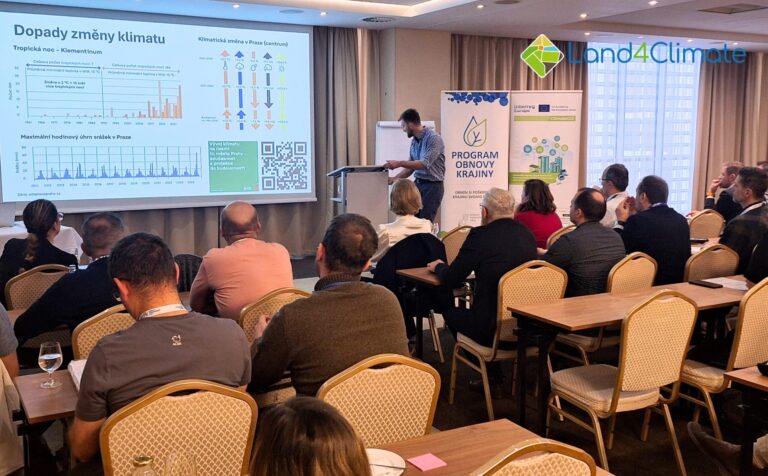
KSK Water Councils seek solutions for sustainable water management in municipalities
The Košice Self-Governing Region, together with the Agency for the Support of Regional Development Košice, organised a KSK Water Councils meeting focused on water management challenges and solutions for municipalities across the region. The discussion centred on blue-green infrastructure and Nature-based Solutions, highlighting their role in addressing droughts, flash floods and the growing impacts of climate change. Participants shared experiences, engaged in open dialogue and explored practical approaches to managing water sustainably - benefiting both people and nature.
What are Water Councils and why were they created?
The KSK Water Councils bring together experts, municipal representatives, state authorities and other stakeholders involved in water management - from flood and drought prevention to water retention and climate adaptation. They serve as a collaborative platform to exchange practical experience and identify solutions tailored to specific municipal and regional contexts, with the long-term aim of translating discussions into concrete, on-the-ground actions.
Expert Insights and Open Discussion
The programme featured a lecture by RNDr. Michal Šereš, PhD., from the Czech University of Life Sciences in Prague, who presented practical examples of how blue-green infrastructure works and why it is increasingly important for municipalities and regions. The lecture was followed by a moderated discussion, giving participants the opportunity to share their own experiences - what has worked well and what challenges they face when implementing Nature-based solutions. The exchange focused on successful approaches, key obstacles and the roles of different institutions in the process. Recurring themes included complex property relations, lengthy permitting procedures, limited capacity in smaller municipalities and uncertainties around project funding. At the same time, several positive examples were highlighted, demonstrating that blue-green solutions are both feasible and capable of delivering tangible benefits.
First stakeholder roundtables within the LAND4CLIMATE project
The facilitated discussion also marked the first stakeholder roundtable within LAND4CLIMATE, which aims to promote the implementation of Nature-based Solutions and blue-green infrastructure as effective responses to climate change. A key component of the project is fostering cooperation between municipalities, experts, watercourse managers and nature conservation authorities. This collaborative approach helps develop solutions that take into account both broader territorial contexts and the specific needs of local communities.
What’s next?
The discussion confirmed that the Water Councils and the Košice Self-Governing Region can play a crucial role, particularly in:
- providing methodological guidance and facilitation support to municipalities,
- connecting stakeholders and promoting the exchange of best practices,
- supporting the strategic planning of water-related measures at regional level.
The meeting reinforced the idea that open dialogue and cooperation are essential to treating water as an opportunity rather than a problem. The KSK Water Councils demonstrated that solutions already exist, and that blue-green infrastructure is not just a trend, but a practical response to challenges municipalities are facing today. More greenery, improved water management and stronger cooperation between municipalities and institutions can significantly enhance the climate resilience of the Košice Region. The Agency for the Support of Regional Development Košice considers these meetings an important step towards turning promising ideas into concrete projects implemented on the ground.
Presentation available here: https://www.arr.sk/wp-content/uploads/2025/12/Kosice_122025_MZI-1-1.pptx
This article was written by Lenka Krištofová from LAND4CLIMATE consortium partner Agency for the Support of Regional Development Košice (ARR)


Publishing date: