Enhancing Ecosystem Resilience via Existing Natural Elements
Nature-Based Solutions (NBS) are adaptation measures based on the introduction, restoration, or management of natural elements within an ecosystem, which gradually become an integral part of it while providing benefits to both the ecosystem itself and human communities. Therefore, considering the natural features already established in the examined ecosystem is essential during the NBS design process.
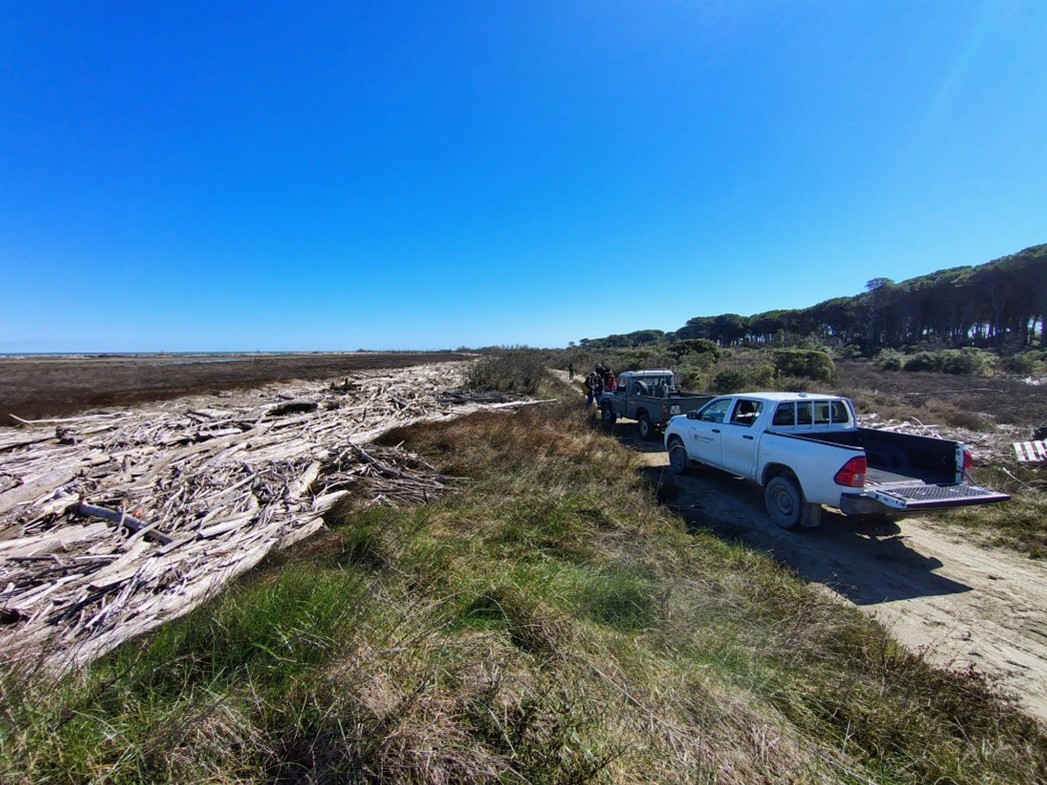
LAND4CLIMATE partners from the University of Bologna and the Delta Po Regional Park carried out a follow-up visit to the NBS implementation site in the Italian Front-Running Region (FRR) on 17 March 2026. The designer responsible for the dune construction in 2027 also participated in the site visit. Ecosystems are highly dynamic environments strongly interconnected with the hydro-meteorological events to which they are exposed. This was clearly demonstrated by the changes observed at the dune site, now covered by a dense layer of driftwood transported by the winter storm surges. However, respecting the existing natural elements can be a great opportunity during the design phase. For example, this wood could be transformed into fascines and wood chips to reinforce the dune base once it starts acting as a protective barrier against storm surges for the vegetation located behind it.
This design approach, which works with existing natural elements, is also central to the design of the other two NBS planned in the Italian FRR. The deep-rooted plant species intended to reinforce a section of the Reno River embankment will be selected among those already naturally present in the area, through laboratory tests that aim to evaluate their root-based soil-retention capacity. Similarly, Salicornia vegetation will be enhanced in a site where it is already established in order to analyse salt absorption under different vegetation densities.
This article was written by Luigi Brogno from LAND4CLIMATE consortium partner Alma Mater Studiorum - Università di Bologna
Publishing date: